
Project introduction
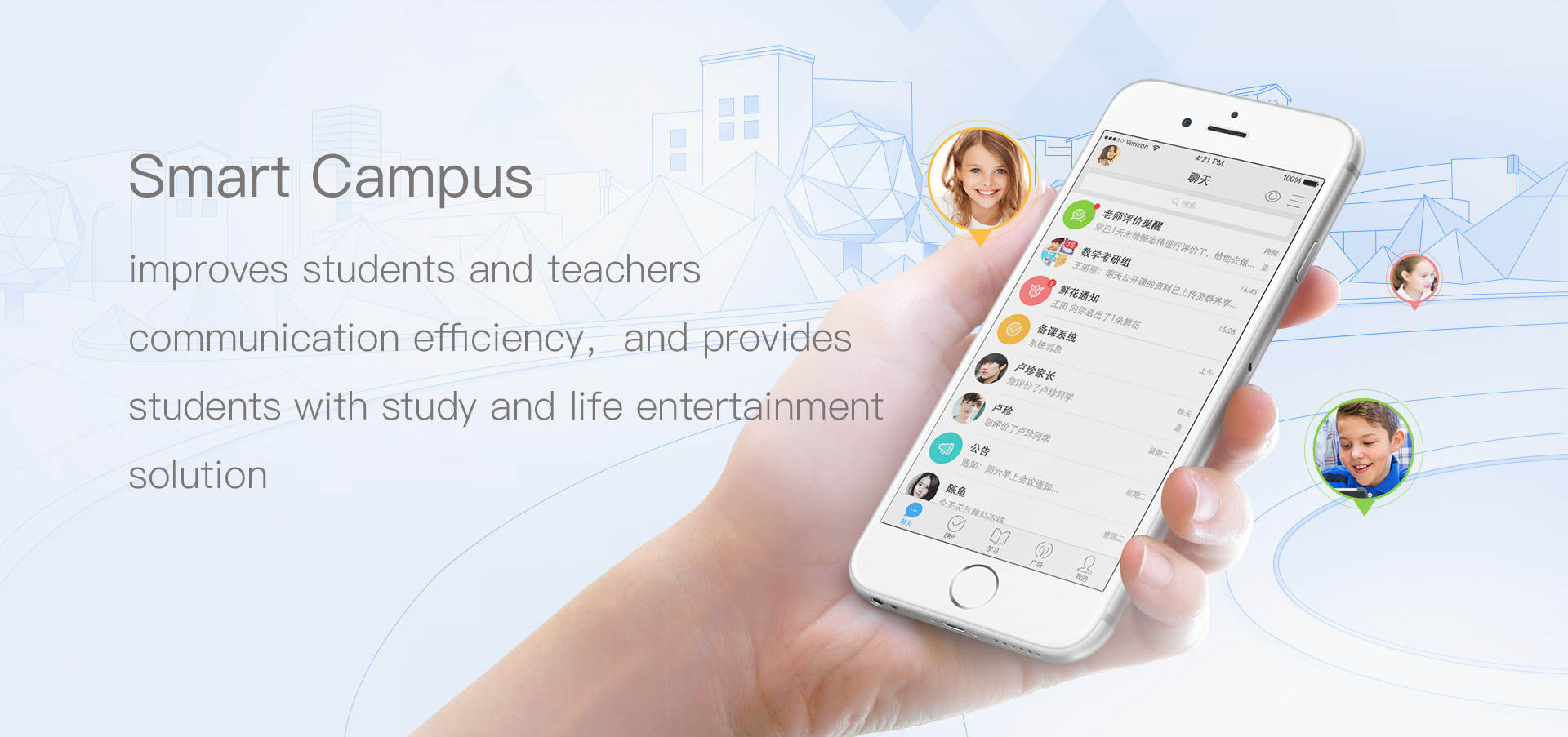
Smart Campus was an app aiming at schools under the administration of Tung Wah Group of Hospitals in Hong Kong. Smart Campus was designated to integrate learning, communication, and school management together. After the preliminary stage of marketing research, our team found that there were lots of demands for this kind of integrated platform in schools of Hong Kong, no matter elementary school or universities.
In this project, I was in charge of product design, user research, and project management. I used different design methods for this cross-platform product, including journey map, scenario mapping, information architecture, low-fi prototypes. Comparing to the previous project, this project improved my management ability, it was also a great exercise and challenge for my judgment, my creativity, and my executive ability.
requirements redesign
Benefited from the Indonesia project, more and more schools cooperated with Smart Campus products. As each school has its own customization requirements, so the workload for developments was still huge. How could we improve the product’s framework to satisfying all the different requirements?
Meanwhile, in order to decrease the cost of development, we organized a meeting and I came up with the module concept. Each function will be divided as an independent module, schools will be able to combine these modules at will create their customized products. Therefore, we reprocessed a functional design and applied this concept to Hong Kong project.
What is module product?
To assemble the product in accordance with different schools’ requirement, which can speed up the production. All the function modular can be divided into components and the assembly of product can be done through shared platform. Also the management staff from schools can manage and operate each component through background management and E-learning.
Shared Platform
Background Management
E-learning Management
what is our target user looks like?
After rebuilding the functional framework, we started the positioning. By interviewing our target users( 10 teachers and 20 students), we concluded that all users can be divided into four types: female students, male students, new teachers and teachers with rich experience.
We concluded that:
1. Students prefer to interact with teachers, but they would feel embarrassing or they don't have time to interact via classes
2. Teachers hope to obtain feedbacks from students, and they would like to share high quality resources with students and other teachers
what our product is?
Journey Map
Through the earlier stage understanding, we realized that students and teachers were expecting an inner communicating tool in campus and the IM function of Smart Campus perfectly fits the needs. Moreover, they need a system that they could use some fragmentary time for studying some easy knowledge to reduce their academic pressure, they also suggested building a platform for providing the study resources and asking questions. Therefore, Smart Campus in Hong Kong is divided into three parts: IM, E-learning, other system management. About E-learning part, I made a Journey Map to consider these issues for the E-learning function design.
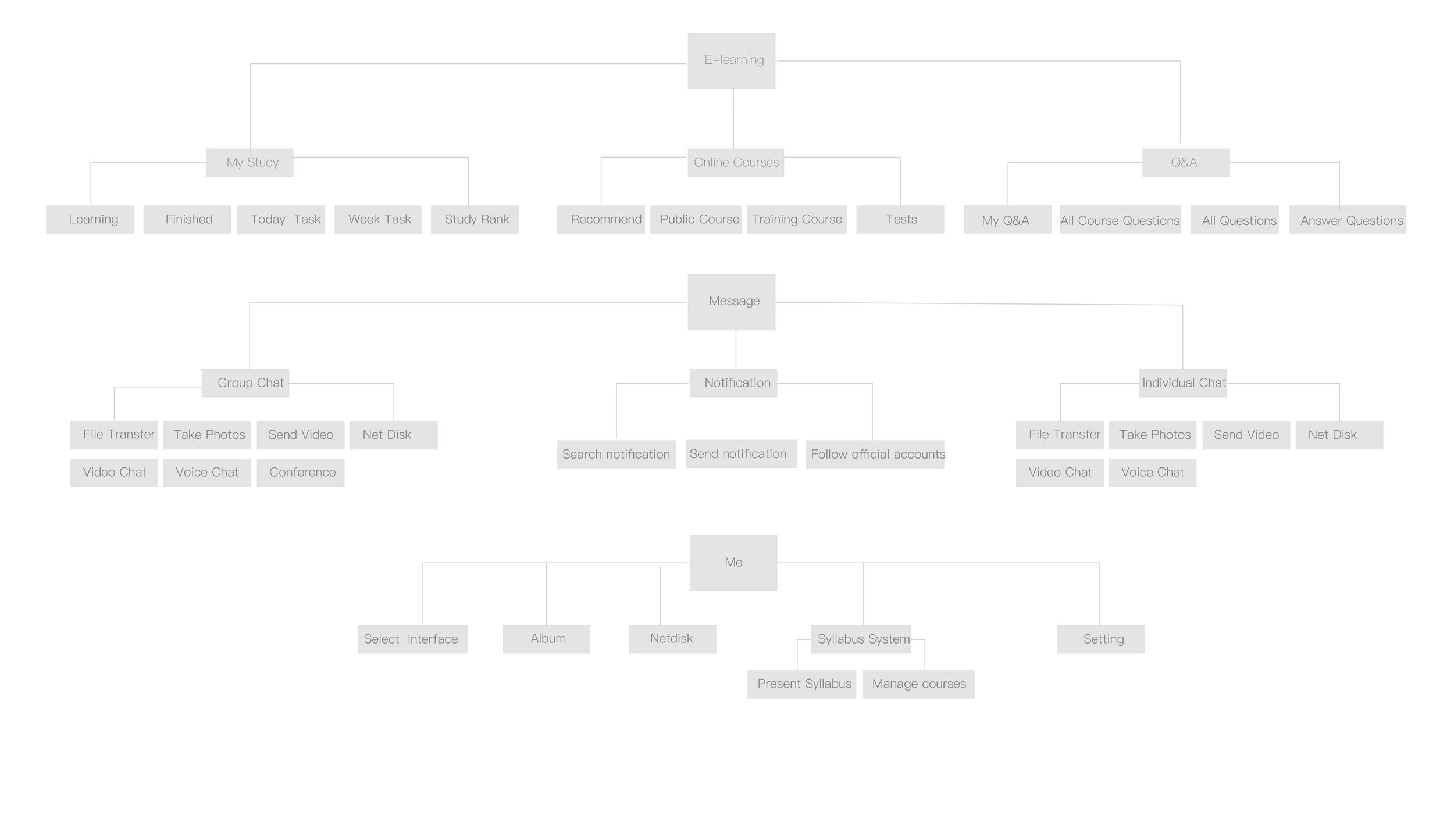
Final information architecture
After Journey Map I made, I divided E-learning part into three parts:
My Study: Students can check and edit your own study schedule in this part
Online Courses: Teachers can public study resources for students who can study what they like
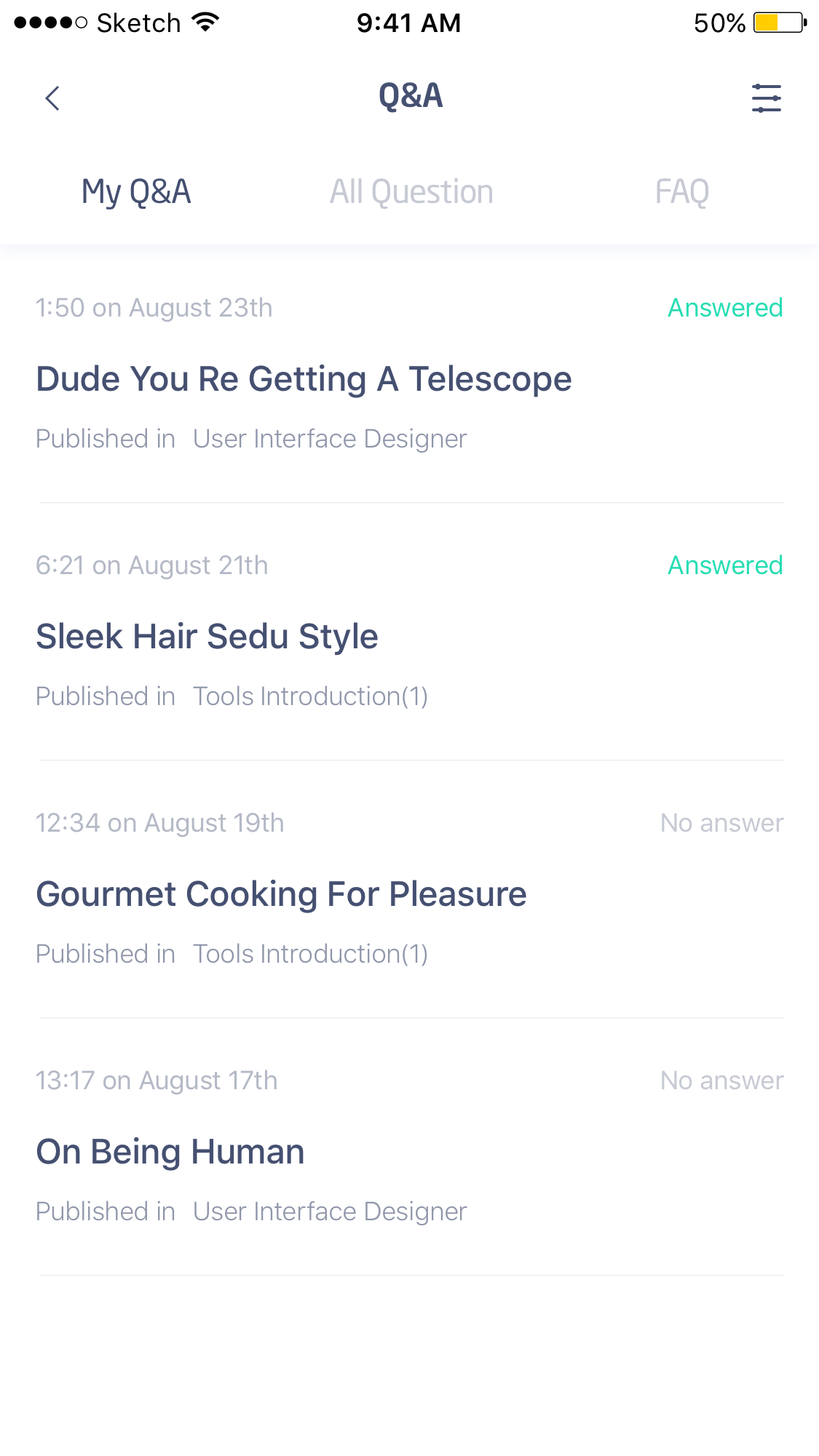
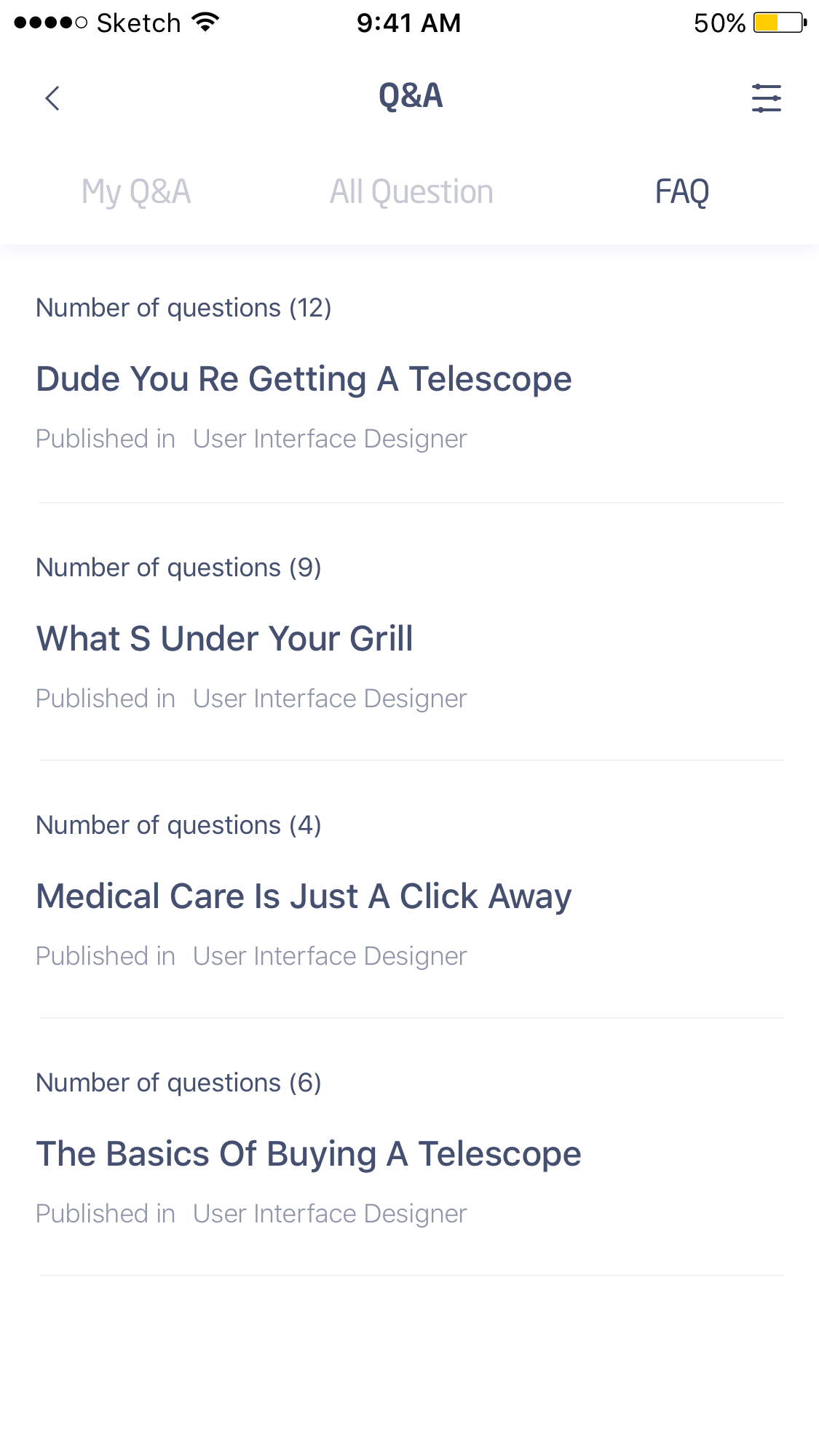
Q&A: If any students meet problems in learning, they can post their questions here and teachers or other students will help to answer
Interactive Design
Owe to the optimization and adjustments of the product’s framework in the earlier stage, the production cycle were two months faster than the Indonesian one. At the same time, the updates of the product increased from monthly to semimonthly.
Wireframe & Low-fi Deisgn
After confirming information architecture, I began to design wireframe and Low-Fi of E-learning. This is wireframe of main function.
These are low-fi design of E-learning and Syllabus.
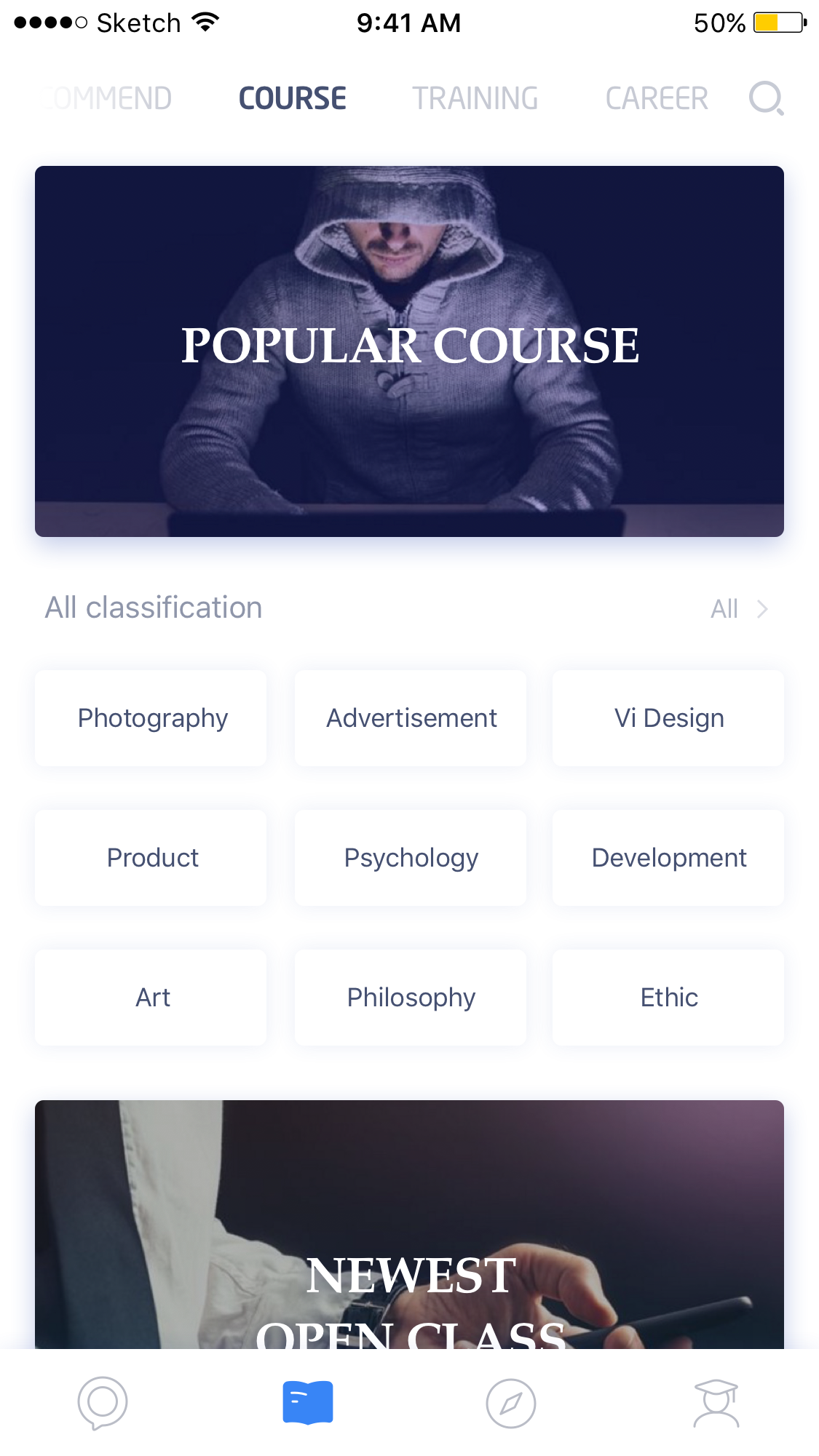
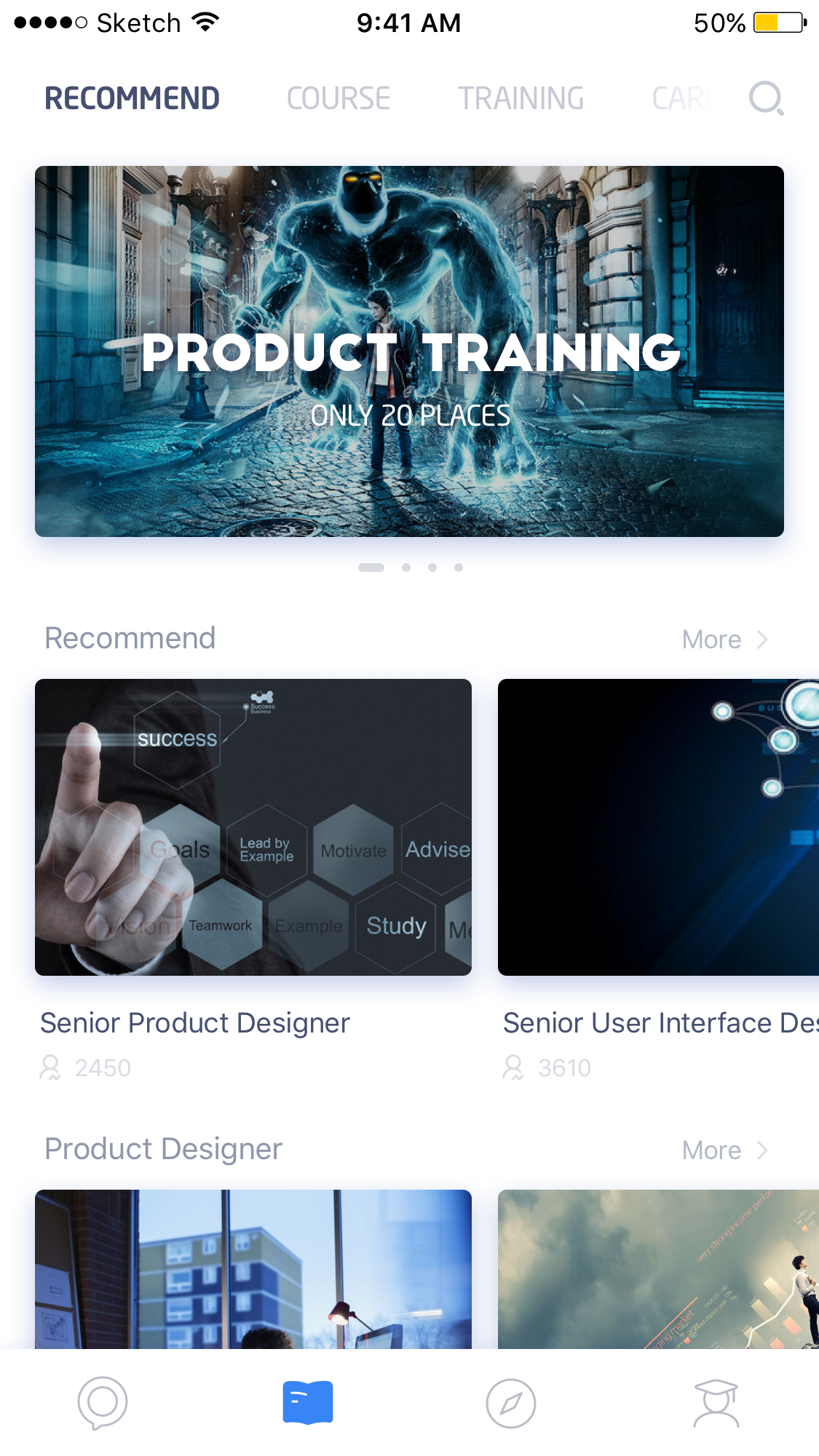
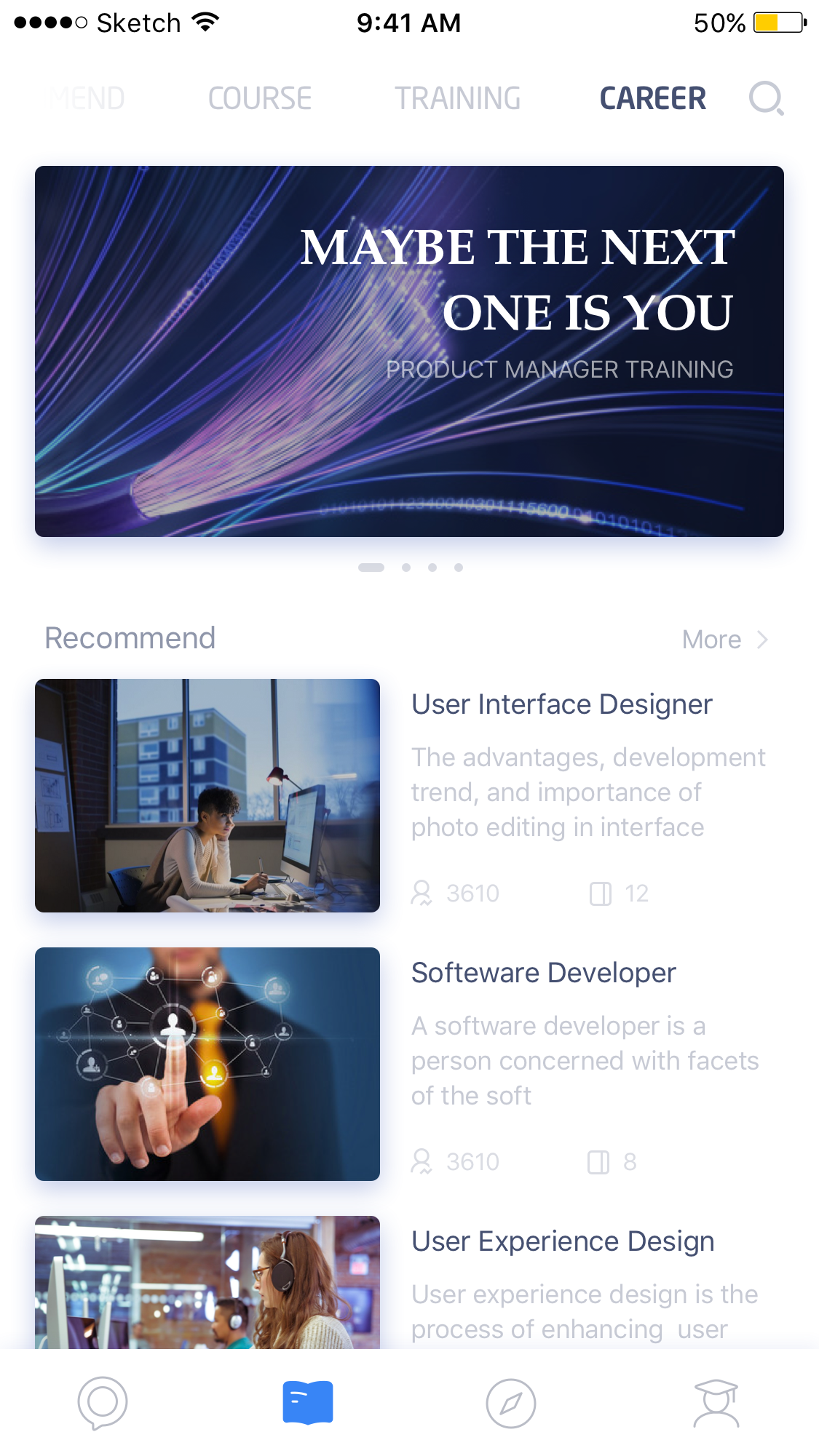
High-fi Design
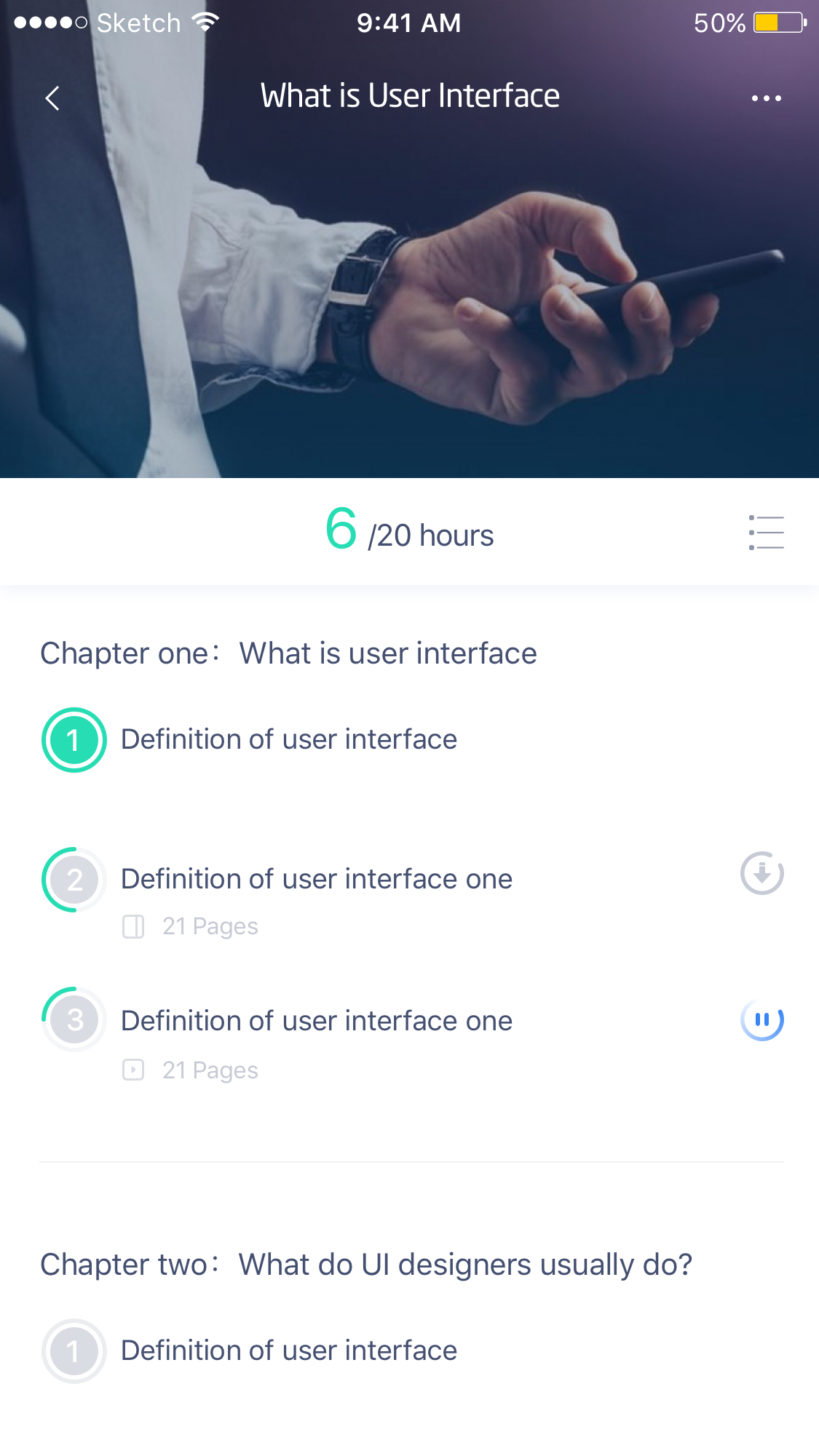
After wireframe and low-fi design, UI designers finished High-Fi design.
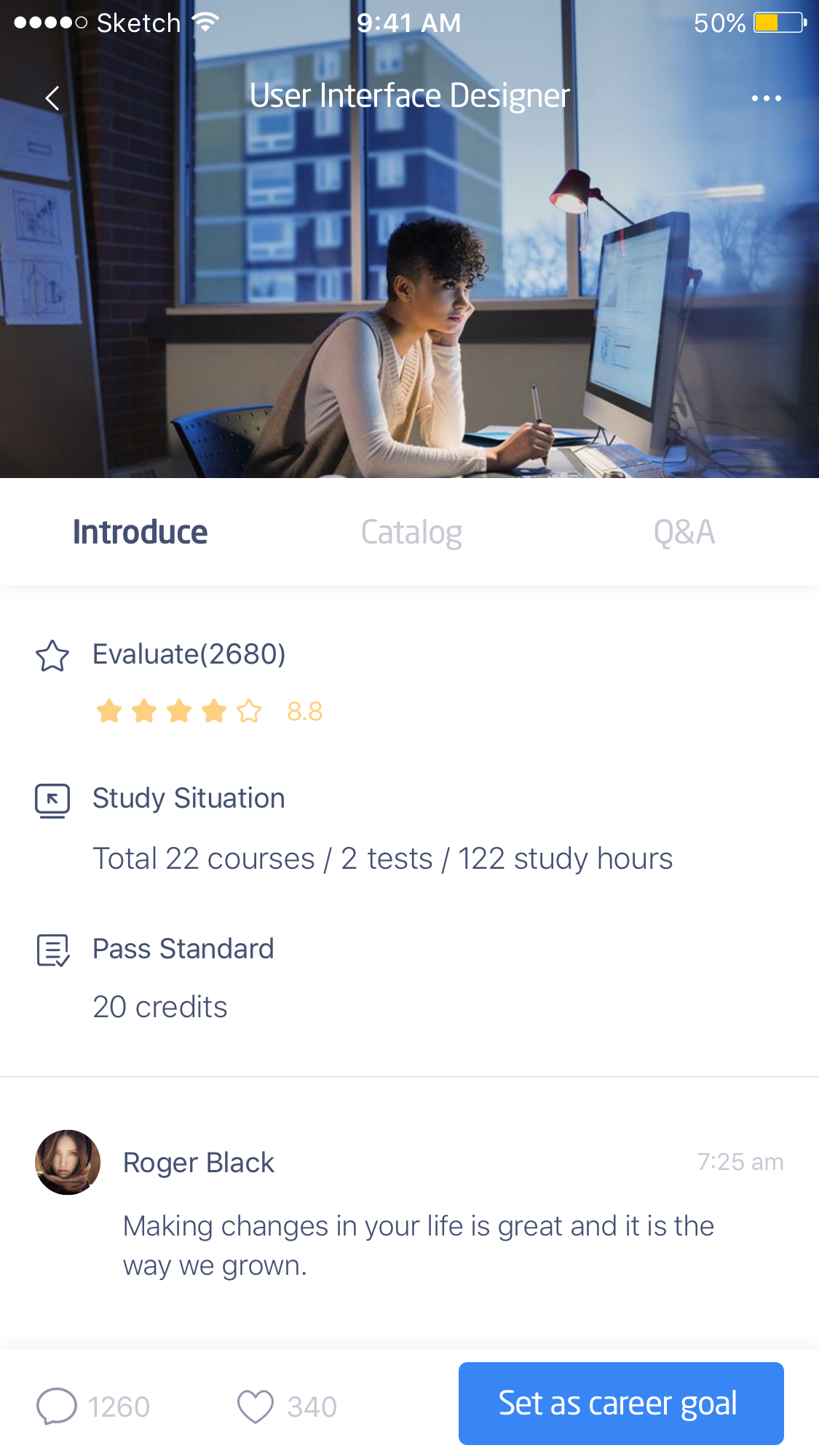
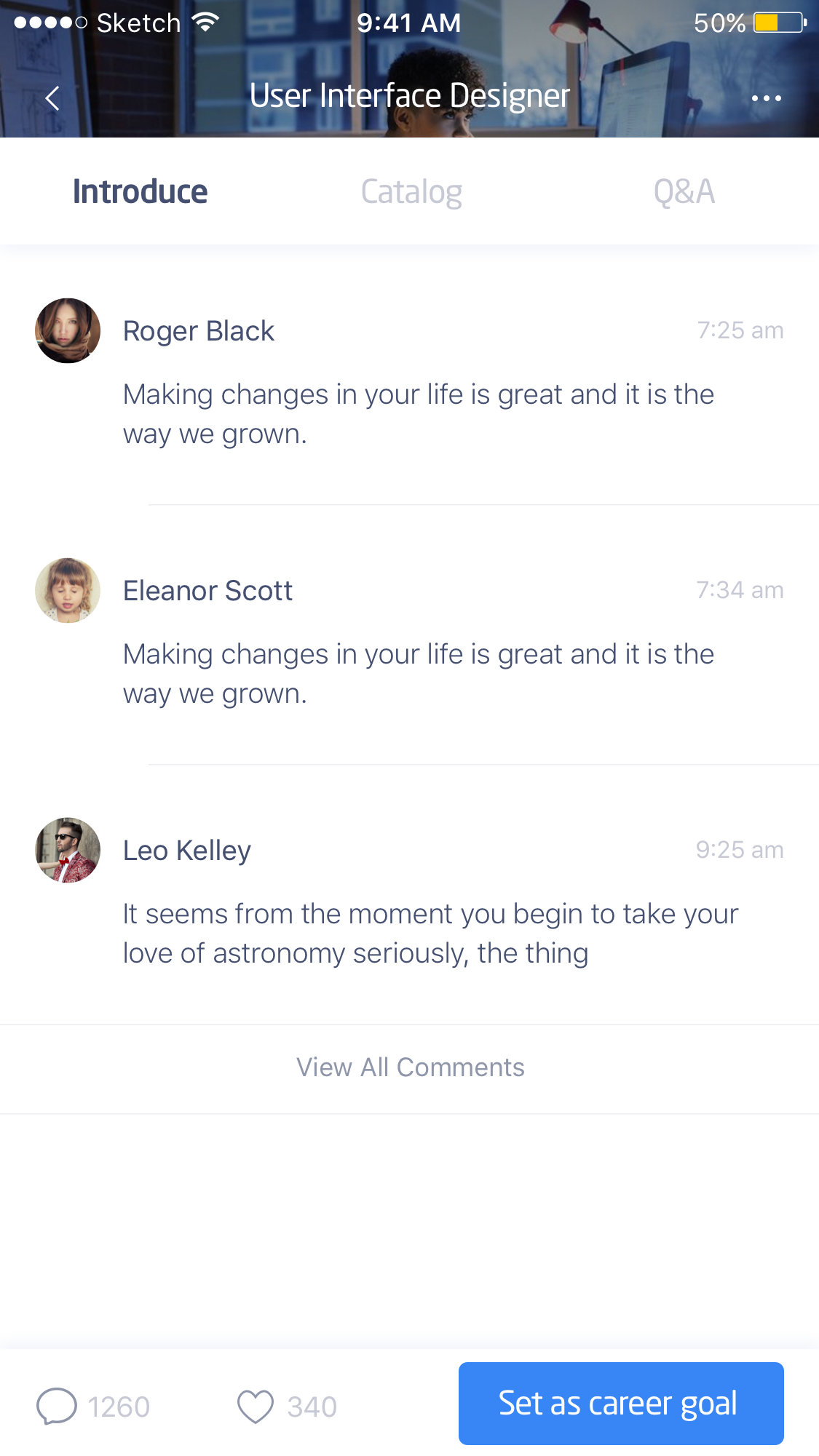
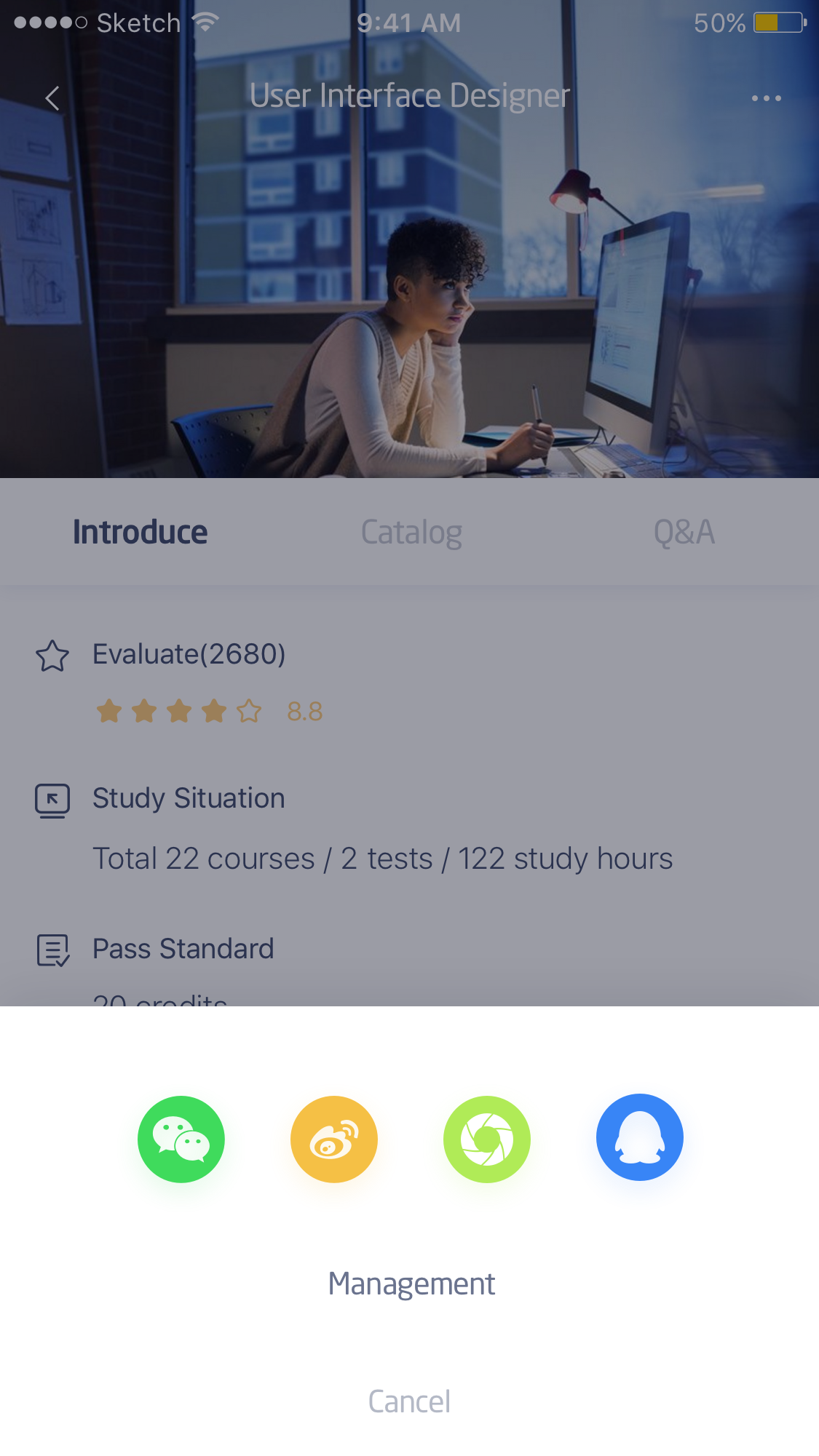
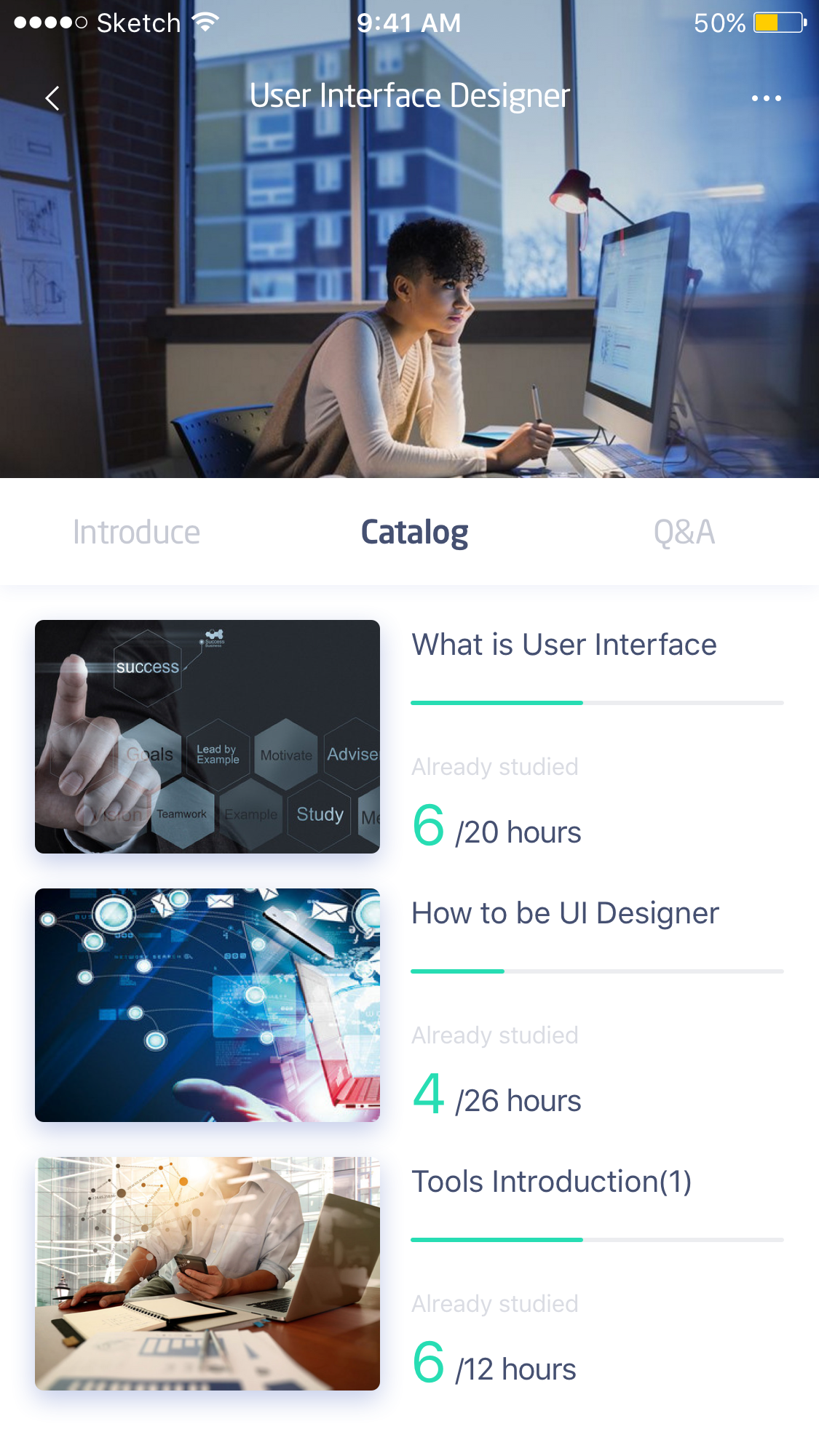
I also redesigned some pages independently

Conclusion
Although I have experience of Smart Campus in Indonesia, however, the target users’ requirements will be different because of the different school natures. Thus the design of product can not only based on the experience, but need serious users research.
In addition to the functional interaction, accurate expression is a crucial part of good interaction. Although traditional Chinese characters are part of Chinese language in Hong Kong, there will be different meanings in the same usage scenario. So the professional translation team is invited to make a check.
The most happen moment for my team and I was when the Smart Campus was highly appraised by teachers and students. I hope we can further optimized the product to bring more excellent experience and service for them.